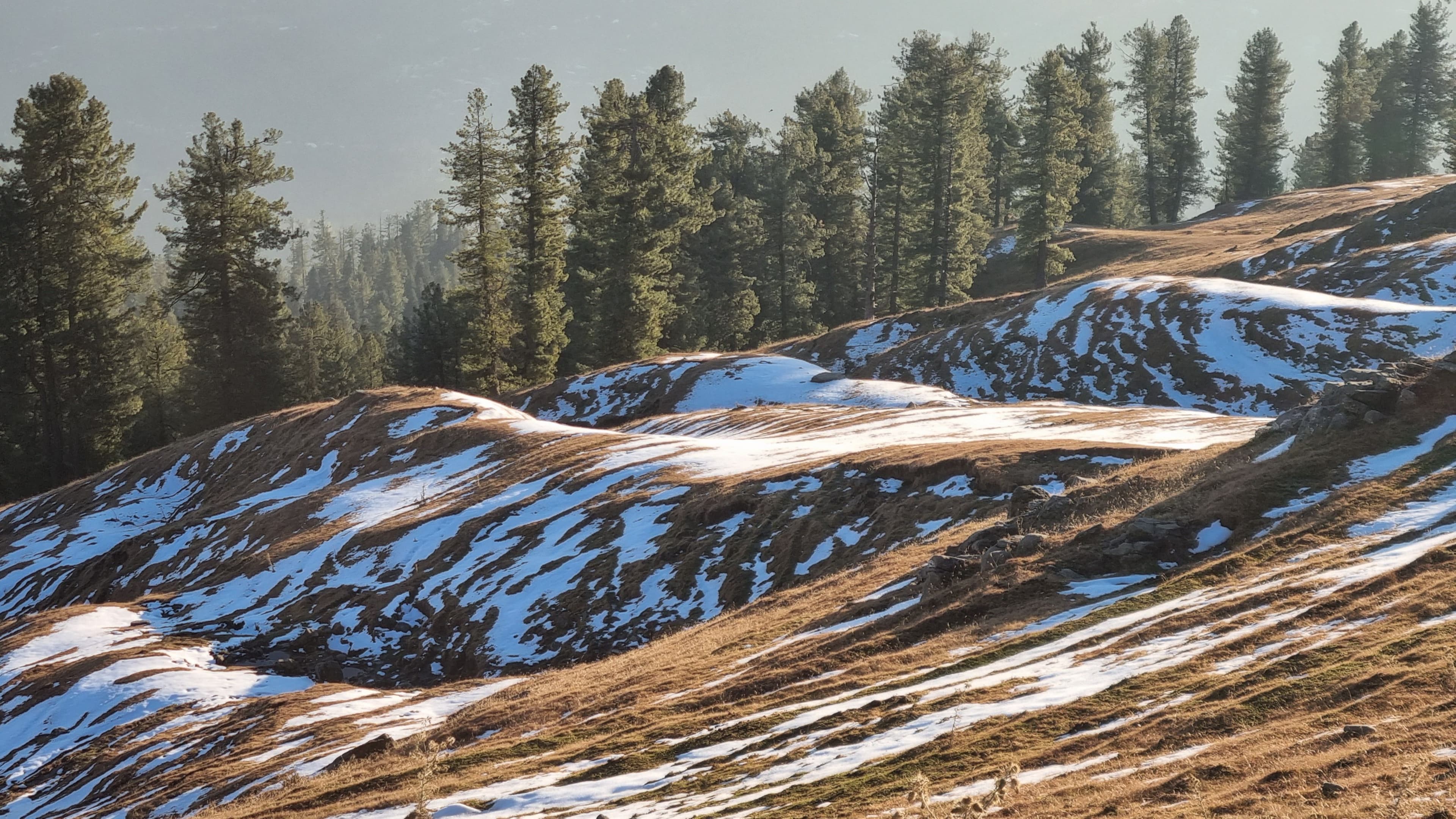
Narkanda–Kotgarh–Thanedar
A forested and orchard-covered stretch of the Shimla hills, linking Narkanda’s high ridge with the quieter settlements of Kotgarh and Thanedar.
Narkanda sits high on a forested ridge, while Kotgarh and Thanedar unfold below it in a quieter pattern of orchards, village roads and scattered homes. The landscape changes quickly: dense fir and cedar around the upper slopes, then terraced fields, working orchards and longer views towards the Sutlej valley. It is close enough to Shimla to remain accessible, but the strongest stays here feel removed from the familiar hill-station circuit.
Thach is interested in this area because its character is spread across the landscape rather than concentrated in a town centre. Narkanda offers access to forest and high ridges; Kotgarh and Thanedar offer privacy, orchard life and independent homes with a stronger sense of place. The area has real potential for small cabins and homestays that feel personal, quiet and connected to the working landscape, provided they are selected carefully and verified property by property.
Know before you go
The land and its people
A high, forested ridge around Narkanda gives way to the cultivated slopes of Kotgarh and Thanedar. Fir, cedar and oak forests occupy the upper elevations, while apple orchards, terraced fields and scattered homes descend towards the Sutlej valley. The landscape alternates between enclosed woodland, open ridgelines and long views across the middle Himalayas.
This is not one continuous town but a dispersed mountain cluster. Narkanda acts as the main roadhead and service centre, while Kotgarh and Thanedar are made up of smaller settlements, orchard estates and homes spread across the slopes. Development is more concentrated around Narkanda; farther into the orchard belt, the experience becomes quieter, more agricultural and property-specific.
Life here is closely tied to horticulture, particularly apple cultivation. Kotgarh and Thanedar are associated with the early development of commercial apple growing in Himachal, and orchards continue to shape the local economy, settlement pattern and seasonal rhythm. The area should be presented as a working agricultural landscape rather than simply as scenic “apple country.”
When to come
Spring brings orchard blossom and clear walking weather, while early summer is greener and generally easier for exploring the forest and village roads. The apple harvest becomes part of the landscape from late summer into autumn, though timing varies by altitude, variety and year. Autumn usually offers the clearest long-distance views. Winter can bring snow around Narkanda and Hatu, but road access becomes more variable. Monsoon travel requires flexibility because rain, fog and road disruption can affect local journeys.
Moderate around Narkanda and Hatu Peak; generally low across the dispersed orchard settlements of Kotgarh and Thanedar, with seasonal increases on weekends and during snowfall.
Being there
Stay for two to four nights. Use Narkanda for access and forest walks, but choose Kotgarh or Thanedar for a quieter orchard stay. A longer visit allows time to move slowly between settlements rather than treating the area as a short stop on the road toward Kinnaur.
Walk through the forest toward Hatu Peak, follow quieter orchard roads around Kotgarh and Thanedar, and explore short village paths between homes, fields and cultivated slopes. Route conditions vary by season, so longer walks should be checked locally, especially during snow, heavy rain or poor visibility. The official Himachal Tourism description places Hatu roughly eight kilometres from Narkanda through forest country.
Look for simple home-cooked meals built around local grains, lentils, rajma, seasonal vegetables, pickles and orchard produce. During apple season, buy fruit directly from growers where invited. Food options become limited outside Narkanda, so the meal quality and arrangements at the chosen stay matter more than a long list of restaurants.
Observe how altitude changes the landscape from Narkanda’s upper forests to the orchard-covered slopes around Kotgarh and Thanedar. Notice the dispersed settlement pattern, the seasonal work inside the orchards, traditional homes alongside newer construction, and the contrast between busy Hatu access and quieter agricultural villages. Orchard blossom is associated with spring, while fruit and harvest activity become more visible later in the year.
Avoid treating the area as a checklist of Hatu Peak, snow viewpoints and orchard photo stops. Central Narkanda and the Hatu road can become congested during weekends, holidays and fresh snowfall. Do not enter working orchards without permission, block narrow village roads, or assume every local track is public. In monsoon or winter, avoid committing to remote stays without confirming the final road, parking and walking approach.
Stay in small, locally run homes and cabins rather than large roadside properties. Ask before entering orchards or photographing people at work. Carry waste back, keep noise low, and use local drivers where road conditions are unfamiliar. Travel outside peak weekends when possible, and remember that orchard roads, water sources and village paths are part of a working landscape, not visitor infrastructure.
Getting there
Narkanda is the main gateway to the cluster, reached by road from Shimla along the Hindustan–Tibet corridor. From Narkanda, local roads descend towards Thanedar, Kotgarh and smaller orchard settlements. Public buses serve the larger settlements, but a taxi or private vehicle is more practical for reaching dispersed stays. Road width, parking and winter reliability vary considerably beyond the main route, so access should be confirmed separately for every property. Narkanda is approximately 64 km from Shimla, while the broader Kotgarh–Thanedar area is around 80 km from the city.
In short
No perches here yet
We're still walking this ground. Join the list and we'll write the day the first one opens.